Brightness in LED panels is measured in nits, where 1 nit is equivalent to the luminance of one candle per square meter. For context, a typical home TV ranges from 250 to 500 nits, while commercial TVs are brighter, falling between 500 to 750 nits. Ever tried watching your home TV outdoors on a sunny day? If so, you’ve likely noticed it appears dim due to insufficient brightness and glare issues. Similarly, the effectiveness of LED panel brightness depends on overcoming ambient light.
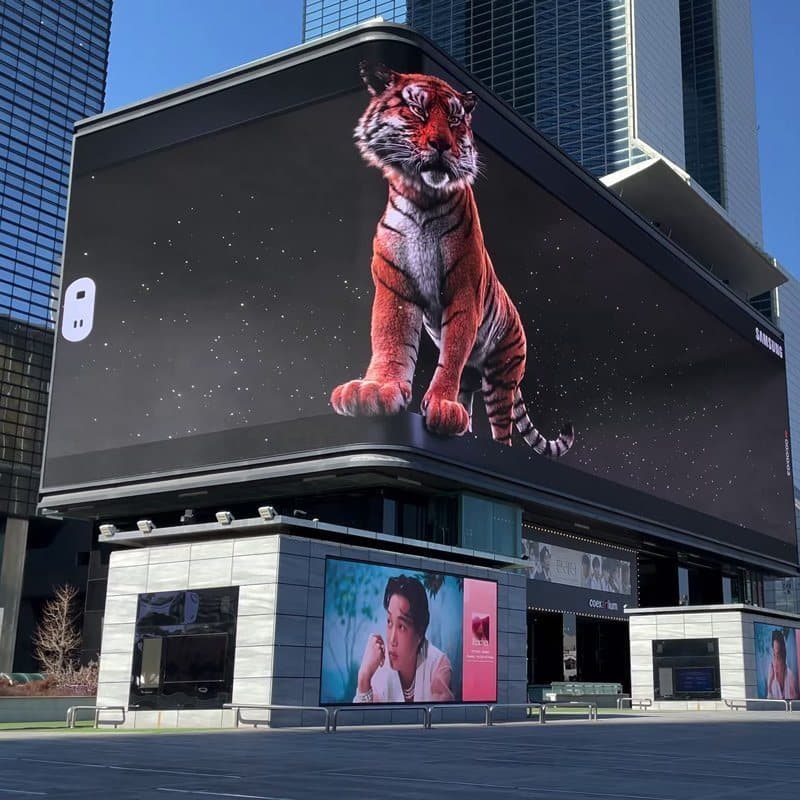
Indoor LED panels usually offer a brightness of 800 to 1500 nits, whereas outdoor panels shine brighter, from 3500 to 6000 nits. For indoor panels placed behind glass but facing outdoors, they’re considered in the outdoor category concerning brightness needs. Fortunately, LED panel brightness is adjustable, making it easier to match the lighting to the time of day. Outdoor billboards, for example, often utilize timers or light sensors to modify screen brightness automatically, a practice mandated in many cities to curb light pollution.
Refresh Rate and Color Depth
The refresh rate of LED panels, measured in hertz (Hz), signifies the frequency at which the displayed image is refreshed every second. A higher refresh rate ensures smoother motion portrayal, crucial for dynamic content and reducing eye strain during prolonged viewing. It’s particularly important in scenarios like live events or sports broadcasts, where fast-moving visuals are common, providing a seamless viewing experience without flicker or blur.
Color depth, quantified in bits, indicates the number of bits used for each color component of a pixel. Common standards are 8-bit, 10-bit, and 12-bit, translating to 256, 1024, and 4096 levels per color, respectively. This means an 8-bit panel can display up to 16.7 million colors (256^3), a 10-bit panel up to 1.07 billion colors (1024^3), and a 12-bit panel can show over 68 billion colors (4096^3). Higher color depth enables a display to render more nuanced and vibrant images with smoother gradients, reducing banding and enhancing the realism of the content. This is particularly noticeable in high-quality video and graphics, where capturing the subtleties of light and shadow is essential for immersive experiences.